We Analyzed 370 Simulated Donor Meetings
Here’s something I’ve noticed after analyzing 370 simulated donor meetings across 106 fundraisers inside Practivated: 90% of conversations actually improve donor sentiment. Fundraisers are doing the hard work of building rapport, establishing trust, and creating genuine connections.
However, too many of those same fundraisers still hesitate when it comes time to make the offer.
I see this pattern constantly, and it used to be my pattern too. We can passionately articulate the importance of our programs when we’re in the field, connecting with the people we serve. But the moment we sit down across from a donor with the intention to invite them into partnership our sense of purpose and confidence disappear.
Our palms clench.
Our hearts race.
And we find ourselves stumbling through the ask (or skipping it entirely).
This gap is costing organizations millions in unrealized gifts.
What Gets in the Way
When fundraisers approach the ask moment, their nervous systems often interpret it as a threat. That’s not about weakness, it’s a normal biological reaction. We have a nervous system that is more than 500 million years old, and it’s trained to keep us safe. The problem is, our brain doesn’t distinguish between asking someone for $50,000 and being chased by a bear. Both can trigger the same protective responses: fight, flight, or freeze.
The result is that fundraisers unconsciously sabotage their own asks in predictable ways by burying the number at the end of a long explanation or framing the offer as a question rather than an invitation. Sometimes they present a caveat or justification immediately after stating the amount, filling that crucial silence instead of holding space for the donor to process. And sometimes, they skip the ask entirely and tell themselves “the timing wasn’t right.”
It makes perfect sense that this is what happens when fundraisers are asked to perform high-stakes conversations they’ve never actually experienced.
If you are one of these people, I want you to know that you’re not alone. And you are not a “bad fundraiser” because you feel uncomfortable or resistant when it comes time to make the offer. It makes perfect sense that this would stress you out.
But although it might feel like it when it comes to the level of stress in your body, that donor isn’t a lion trying to eat you.
What Creates Better Ask Effectiveness
The good news is that our data from the State of Donor Conversations Report reveals something I’ve seen over and over again: fundraisers who run through conversation scenarios ahead of time, repeatedly show measurable improvement. And those who use feedback grow faster and stronger.
This isn’t rocket science, but it is counter to how most organizations approach fundraising development. Our industry typically sends people to conferences, or gives them scripts. We tell them what to say in a generic way, and then we put them in front of donors and hope they are able to translate all of that content into dynamic relationship-based context.
But information doesn’t create transformation. Knowing what to say and being able to say it under pressure are completely different things.
What actually moves the needle on ask effectiveness comes down to a few key elements.
- Repetition in low-stakes environments. Your fundraisers need to hear themselves make offers (out loud, in conversation) before they do it with a real donor. They need to practice being clear, specific, and direct.
- Second, they need real-time feedback that’s specific enough to act on. General advice like “be more confident” doesn’t help. Feedback like “you qualified your ask immediately after stating the number, try holding space instead” does.
- Third, they need to build tolerance for discomfort. That pause after an offer feels eternal. Fundraisers need to experience that pause repeatedly until their nervous systems stop interpreting it as danger.
What We're Seeing Inside Practivated
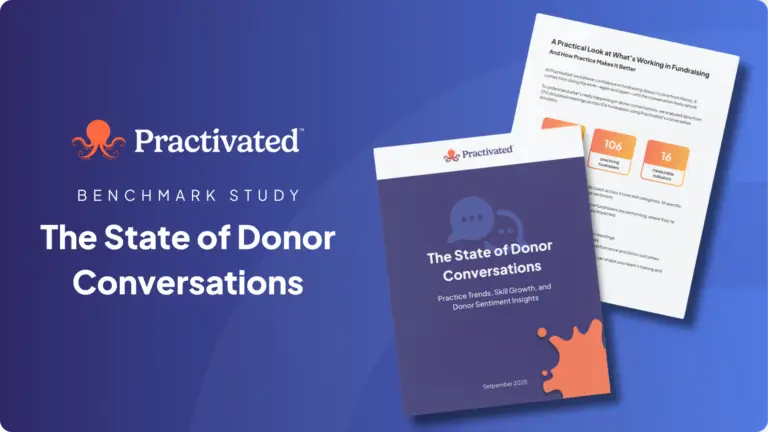
The State of Donor Conversations Report gave us a clear picture of where fundraisers are strong and where they’re struggling. Confidence, clarity, and relevance are clear strengths across teams. Fundraisers know their missions, they believe in their work, and they genuinely care about donors.
But structure and making the offer remain the most common growth opportunities. And this is exactly where repetition makes the biggest difference.
When fundraisers use Practivated to practice their offers (with AI-simulated donors who respond realistically and our AI coach Tivy who provides immediate, specific feedback) we see rapid improvement. It doesn’t take years, it takes minutes and weeks.
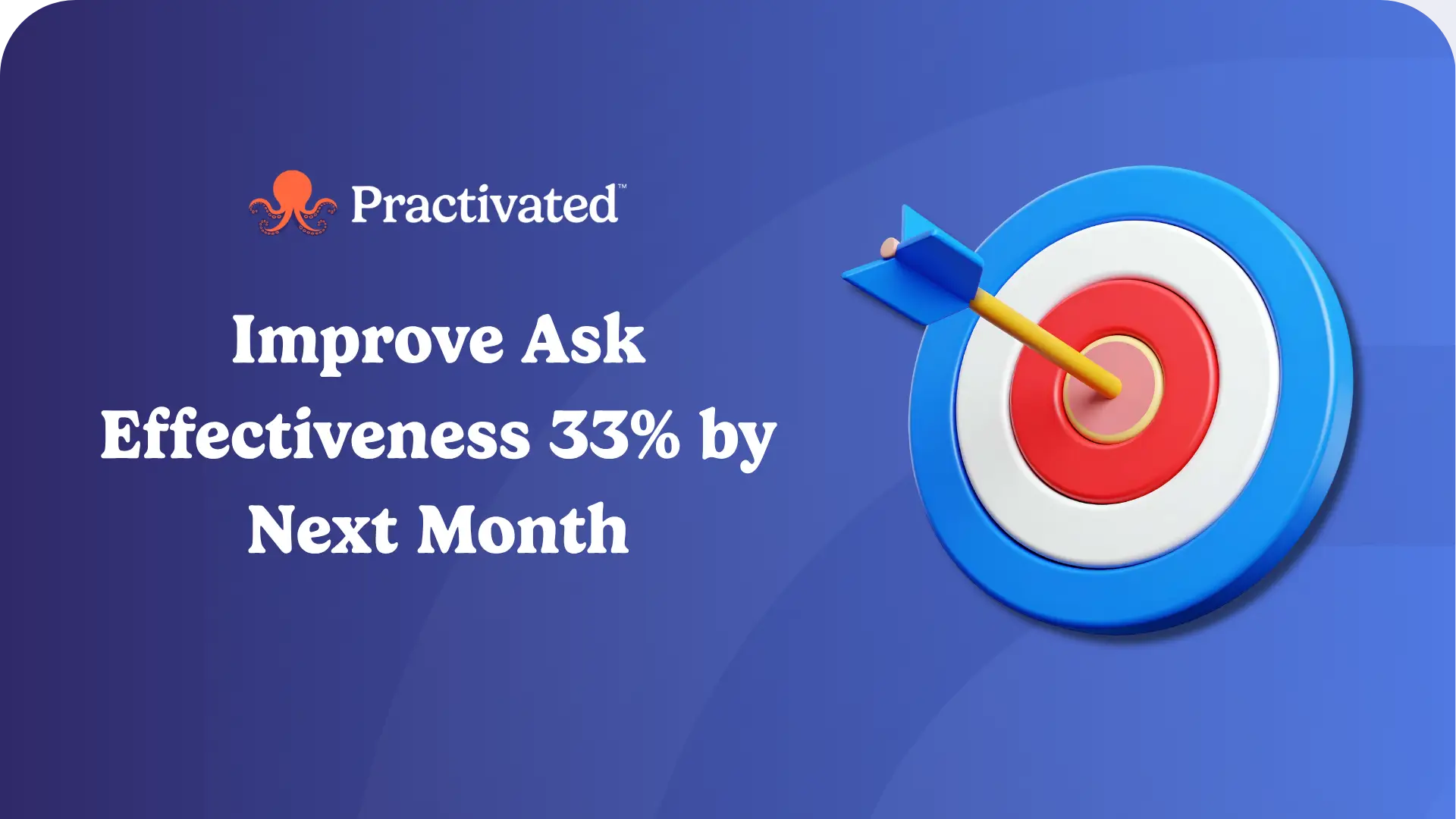
The 33% improvement in ask effectiveness is what becomes possible in one month when fundraisers finally have a safe space to practice the hardest part of their job.
Here's What I Want You to Know
If your fundraisers are having good conversations but not closing gifts, the solution isn’t more training content. They need repetition, muscle memory, and feedback.
Every donor meeting is an investment of time, relationship capital, and organizational resources. When your fundraiser hesitates on the offer (or skips it entirely) that investment doesn’t pay off.
There is a different, better, and more sustainable way forward. When we honor the deep relationship between our minds and bodies, when we give fundraisers the opportunity to practice in environments that feel safe, fundraising can shift from something we dread to something that feels connected and empowering.
Ready To See How Practivated Can Help Your Team Build Ask Confidence?