Here's a scenario that happens at organizations everywhere, all the time:
You finally hire a new fundraiser. You’re excited because you believe they’re talented, mission-aligned, and they’re eager to get started. You invest weeks (sometimes months) in onboarding them. CRM training, program deep-dives, shadowing calls, reviewing the case for support.
And then you send them out to meet with donors.
Six months later, they leave.
Maybe they told you they “just weren’t cut out for fundraising.” Maybe they found something else. Maybe they stuck around longer but never quite hit their stride (always hesitating before the big conversations, always finding reasons to delay the ask).
You might think those are stories about bad fundraisers but a lot of the time, they are stories about what happens when we set people up to fail.
The Real Cost of "Not Ready Yet"
When a new fundraiser isn’t ready to have real donor conversations, the consequences ripple out in every direction.
There’s the obvious cost: you’re paying a full salary for someone who isn’t yet generating revenue. Depending on the role, that’s $100,000 to $300,000 or more per year. If it takes 6-12 months before they’re truly productive, you’re looking at $50,000 to $150,000 in salary alone before you see a return (or know that they were really the right fit).
But that’s just the beginning….
> There are the donors who get a lukewarm first impression and never come back.
> The prospects who could have been cultivated but weren’t because your new hire wasn’t confident enough to pick up the phone.
> The relationships that stalled because a fundraiser talked around the ask instead of making it.
> There are the gifts that simply never happened because nobody was ready to invite them to give.
And there’s something else that rarely gets talked about: the cost to your senior fundraisers. Every hour they spend coaching, role-playing, and hand-holding a new hire is an hour they’re not spending with their own donors. Your best people become de facto trainers, and their portfolios suffer for it.
This isn’t sustainable. And most organizations know it but they just don’t know what else to do.
The Gap Traditional Onboarding Can't Close
Most onboarding programs do an excellent job teaching fundraisers what they need to know. The problem is that knowledge doesn’t equal readiness.
I’ve trained over 100,000 fundraisers at this point, and here’s what I can tell you: you can know exactly how to make an ask, but if you’ve never said those words out loud (if you’ve never felt your nervous system spike and figured out how to push through the discomfort) your skills actually decrease in the moments that matter most.
This is about our biology. Our nervous systems are designed to protect us from perceived threats. And for most people, asking someone for a large sum of money feels threatening. So our bodies do what they’re designed to do and tell us to avoid, delay, or freeze.
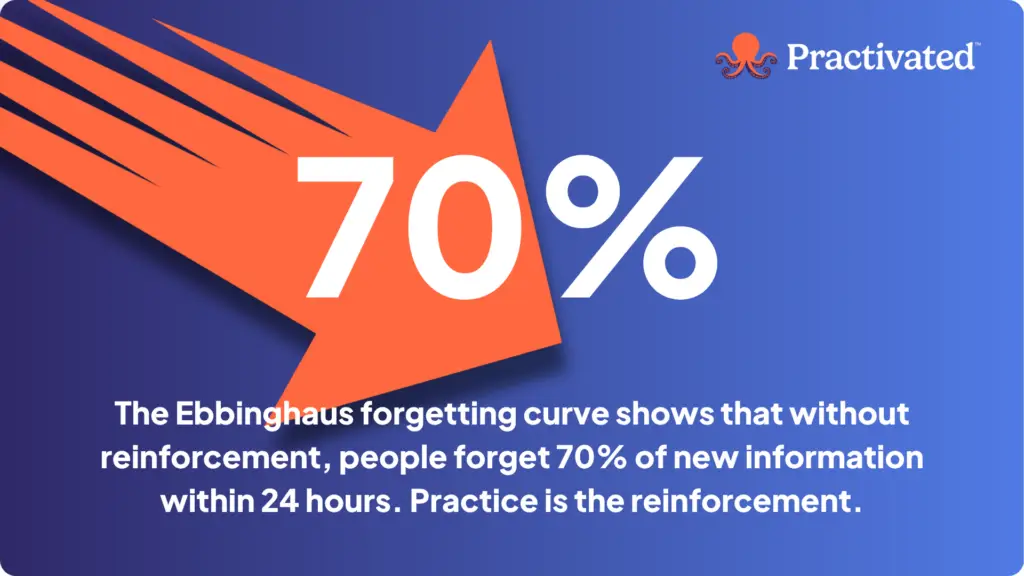
The only way through this is repetition, feedback, and muscle memory. You build readiness through practice where you actually say the words, feel the discomfort, and build the muscle memory to move through it.
But until now, the only way to get that practice was in high-stakes situations with real donors, where real relationships and real dollars were on the line.
Managers don’t have 30 minutes to role-play with every fundraiser before every meeting. And even when they do, it’s awkward, inconsistent, and impossible to scale.
So we keep sending people into donor meetings before they are ready, and then we wonder why they struggled, why they left, and why the cycle kept repeating.
What UTEP and UCF Figured Out
When the University of Texas at El Paso brought on new gift officers, they ran into the same challenge every advancement team faces: traditional training got fundraisers to a certain point, but there was still a gap between knowing the strategy and being able to execute it.
Fundraisers understood the case for support. They could articulate the mission. But when it came time to navigate a real donor conversation (especially the hard parts) they hesitated.
So UTEP integrated Practivated into their onboarding program.
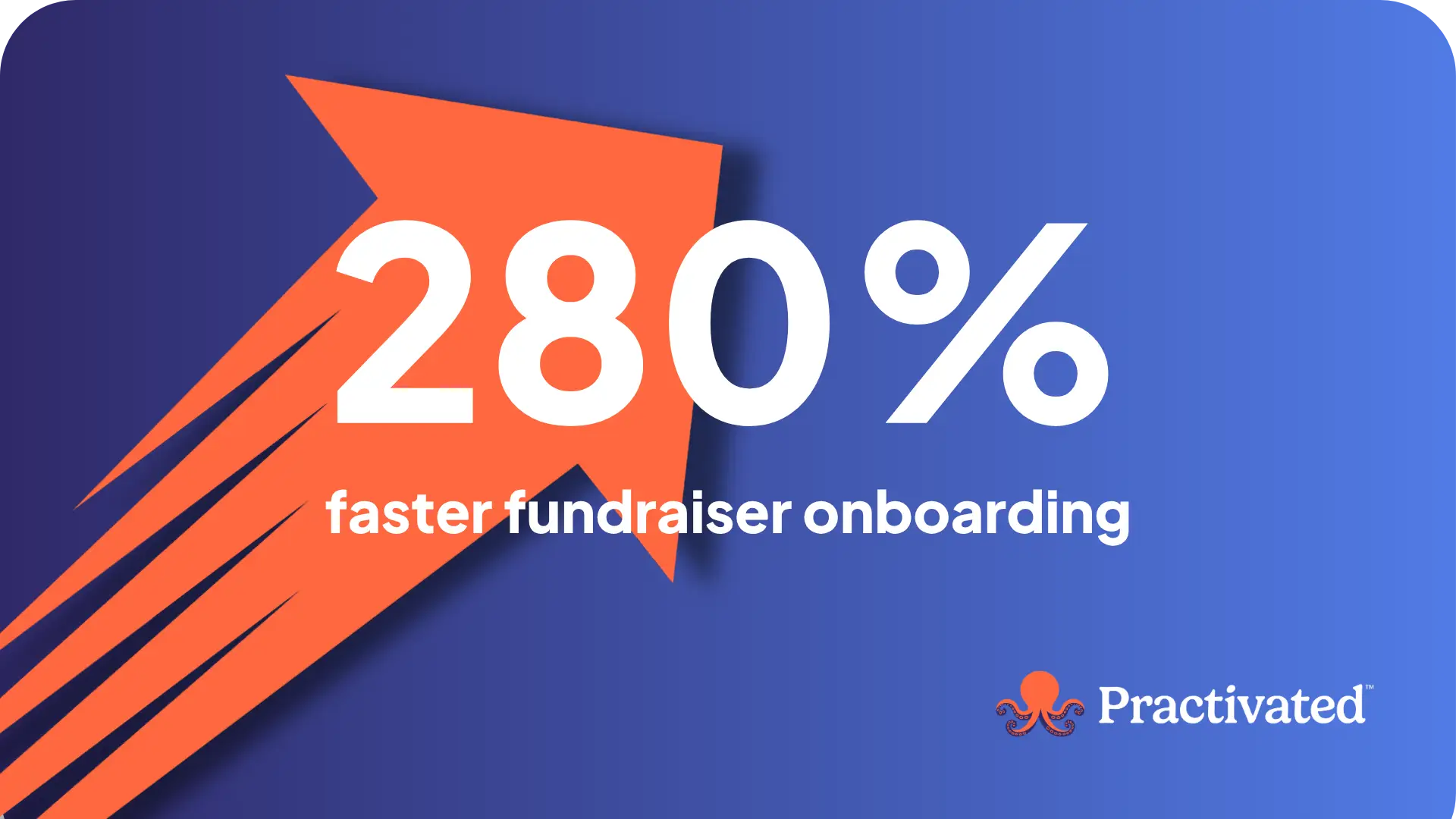
The result: new fundraisers reported feeling ready to get in front of donors 280% faster than their peers who didn’t use the platform.
That’s the difference between a fundraiser who’s productive in weeks versus one who’s still finding their footing after three months. It translates into months of salary recouped, donor relationships that actually move forward, and senior fundraisers who can focus on their own portfolios instead of constantly coaching new hires.
One UCF fundraiser spent just 10 minutes practicing a challenging donor conversation with Tivy (our AI coach) and then closed an unexpected $5,000 gift because he walked into that meeting prepared, regulated, and ready.
What Readiness Actually Looks Like
Readiness is about skills, clarity, muscle memory, and confidence. It’s not about personality or being a “natural” at fundraising (because as we all know, transferable skills don’t always transfer).
Readiness is about having done the hard thing enough times (in a safe environment) that your body knows how to respond when it matters.
It looks like….
- The fundraiser who can make the ask without their voice getting tight, because they’ve already made it fifty times.
- The gift officer who can navigate an unexpected objection without freezing, because they’ve practiced recovering from curveballs.
- The new hire who gets in front of donors in their first month (and actually moves relationships forward) because they don’t have to wait until real stakes to figure out what to say.
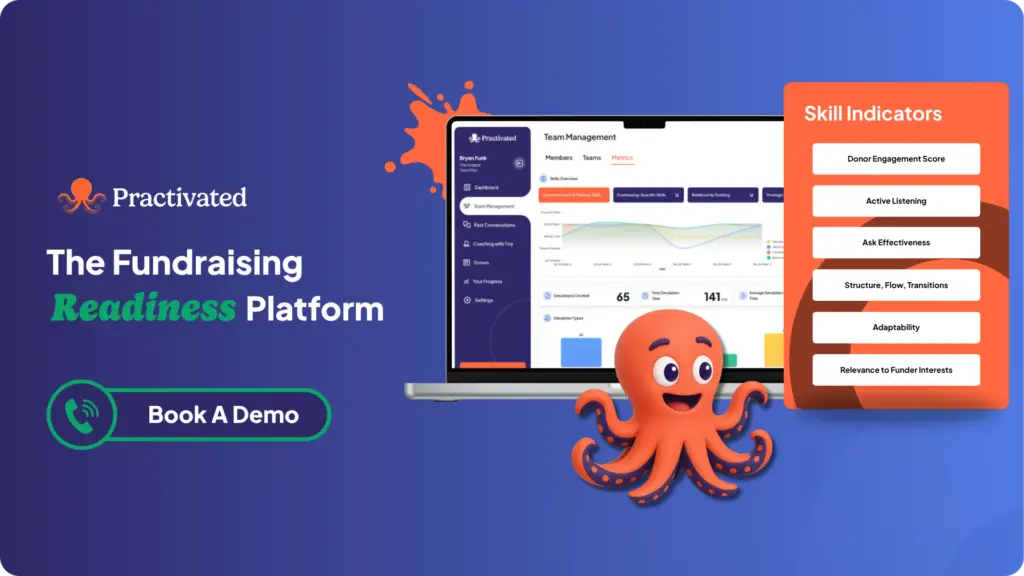
This is what Practivated makes possible through dynamic training and repetition with real-time feedback, personalized coaching, and the ability to build muscle memory that no webinar or workshop can provide.
The Math That Changes the Conversation
If your average new fundraiser takes 9 months to become fully productive, and Practivated cuts that to 3 months, you’ve just recovered 6 months of salary. On a $200,000 hire, that’s roughly $100,000.
But the real ROI isn’t just in salary savings, it’s also in the gifts that happen because your fundraiser was ready to ask, the donors who stay engaged because they had a great first conversation, and the reduced turnover because your people actually feel equipped to succeed.
It’s also in your senior team getting their time back, so they can focus on the work only they can do.
If you’re doing the math on what slow onboarding is actually costing your organization—let’s talk.
Ready To See How Practivated Can Help Your Team Build Ask Confidence?