The phone call started the way a lot of our conversations with advancement leaders do these days.
“We can’t recruit people to move here. It’s a wonderful place, but it’s a fairly small community. We really have to focus on growing our own talent.”
The VP saying this wasn’t frustrated. He was pragmatic. He’d been in healthcare advancement for over 20 years and had seen the talent landscape shift beneath him. The external recruiting playbook that worked a decade ago (post a listing, fly in candidates, offer relocation) is breaking down everywhere, not just in smaller markets.
And he’s far from alone.
The Numbers Tell the Story
Across the nonprofit sector in 2026, we’re seeing converging pressures that make the “recruit externally” approach increasingly unsustainable. Funding uncertainty is forcing organizations to be more careful with hiring budgets. Burnout (which 95% of nonprofit leaders now cite as a major concern) means top performers in other organizations aren’t eager to jump ship. And the competition for fundraising talent has never been fiercer, with healthcare, higher education, and national nonprofits all chasing the same small pool of experienced major gift officers.
The institutions pulling ahead right now aren’t the ones with the biggest recruiting budgets. They’re the ones who’ve figured out how to develop talent internally, faster, more deliberately, and with better results than traditional training ever delivered.
The Transition Gap Nobody Talks About
Here’s a reality that every advancement leader recognizes but few organizations have actually solved:
When a talented annual giving officer gets promoted to major gifts, the typical transition experience is: “Congratulations, you’re now a major gift officer, go figure it out.”
The skills that made them excellent in annual giving (volume, process efficiency, campaign management) are fundamentally different from the skills that close a $50,000 or $500,000 gift. Major gifts require comfort with ambiguity, emotional intelligence in high-stakes conversations, and the confidence to sit in silence after making an ask.
Most organizations address this gap with… mentorship if they’re lucky. Sink-or-swim if they’re not.
And the result is a 12-to-18-month ramp-up period that institutions simply can’t afford anymore. One advancement leader we work with described it as a crisis: “We lose a full year of potential donor engagement every time someone transitions into major gifts.”
A Different Approach: What MSU Built
Michigan State University offers a powerful example of what’s possible when an institution commits to growing their own talent systematically.
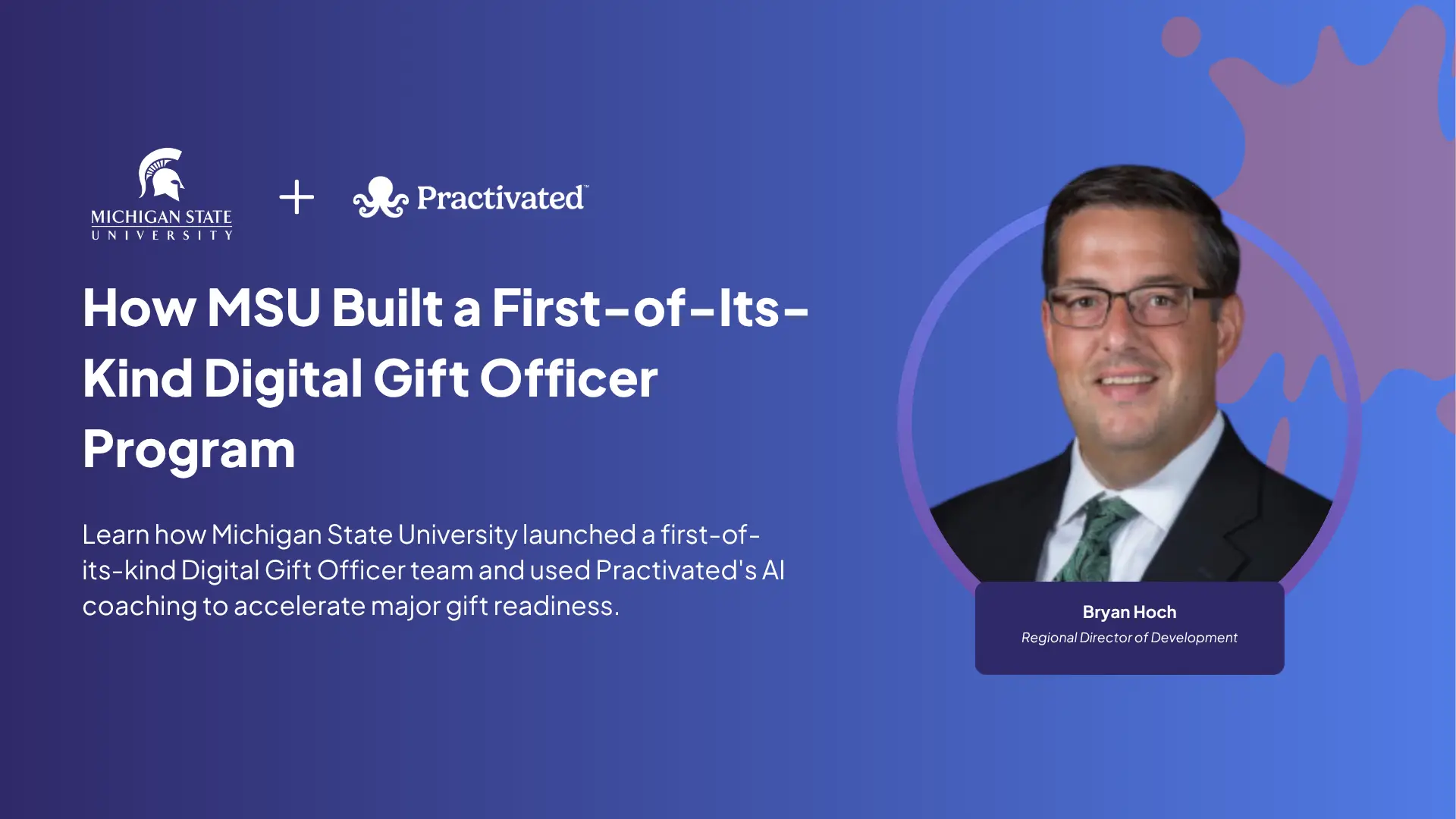
In late 2025, MSU launched a centralized Digital Gift Officer (DGO) team focused exclusively on qualifying and advancing major gift prospects at the $50,000+ level. Each of the three DGOs brought strong fundraising and engagement experience. However, they needed to quickly build confidence and skill in major gift conversations while managing a broad and complex portfolio across multiple units. Bryan Hoch, a Regional Director of Development with over 20 years at MSU, was tasked with building and managing this team from the ground up.
Rather than hoping they’d figure it out on the job, Bryan partnered with Practivated to design a structured development pathway. Charlotte Fedders, our Customer Success lead, worked with Bryan to create a phased onboarding strategy that had DGOs practicing realistic gift conversations within days of being hired.
The results: Within five months of implementation, MSU’s DGOs transitioned from annual giving backgrounds to confidently leading discovery conversations and contributing to major gift pipeline development. Early indicators showed increased confidence, stronger conversation structure, and improved strategic thinking in donor interactions.
MSU’s DGO program is now generating national interest in the higher education fundraising community. Bryan will be speaking at the 2026 Fundraising Readiness Summit (5,000+ attendees) about the model.
“University Advancement at MSU is exploring ways to use AI and leverage the power of fundraising-specific tools. There is nothing on the market like Practivated and I am proud that we have been an early adopter.”
— Bryan Hoch, Regional Director of Development, Michigan State University
MSU is now exploring how AI-enabled practice and coaching can scale across its advancement organization to support fundraising, alumni relations, and beyond. Bryan described the growing institutional interest:
What “Growing Your Own” Actually Looks Like
Based on what we’re seeing across healthcare systems, universities, and national nonprofits, the organizations doing this well share three practices:
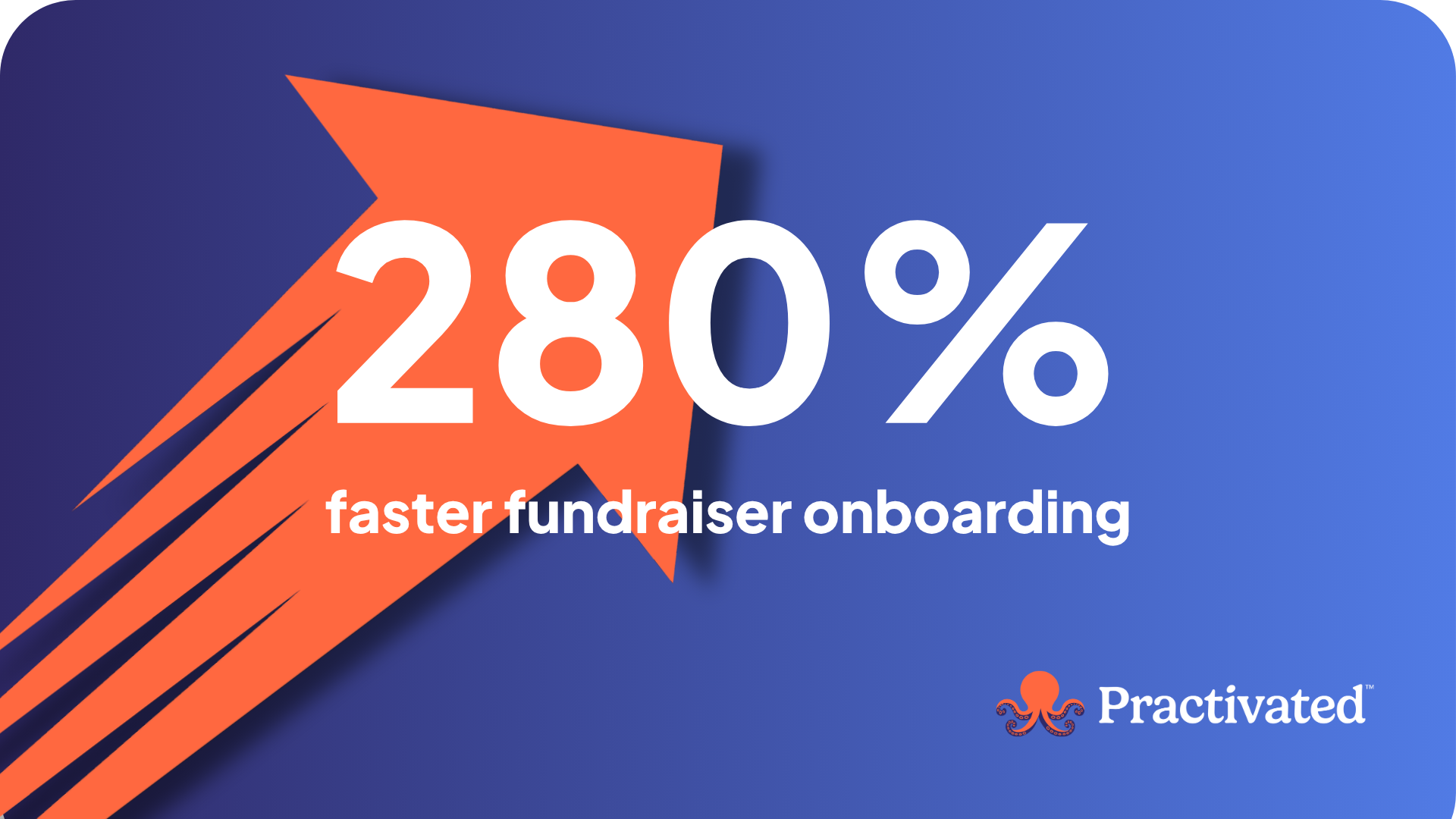
They treat onboarding as skill development from day one. Not a week of reading policies and shadowing meetings. New fundraisers are in simulated donor conversations immediately, building muscle memory before any real-stakes meeting. We’ve seen this compress onboarding from 8 weeks to 2 weeks with fundraisers who are actually ready to engage donors by the end.
They build deliberate practice into the weekly workflow. Much more effective than annual conferences or quarterly training, fundraisers get 30 minutes of weekly practice with scenarios that challenge the specific skill each fundraiser needs to develop. The data shows that teams that practice consistently see donor touchpoints increase by 280% within three months.
They create visibility into team development. Managers can track progress across skill competencies in real time through platform analytics that show where each team member is growing and where they need support. Bryan Hoch at MSU tracks his DGOs across 16 skill indicators in four categories, giving him coaching insight without micromanagement.
The Competitive Advantage
Here’s what this comes down to: in a sector where every organization is competing for the same scarce talent, the ones who learn to develop fundraisers internally, quickly, deliberately, and with real accountability, will have an advantage that no amount of recruiting spend can match.
Your next great fundraiser might already be on your team. They just need the right way to practice.
Ready to explore how Practivated can help you build your team’s fundraising skills from within? Schedule a conversation with us!